Understanding Tesla's Full Self-Driving System: Operation, Limitations, and Service Guidelines
Tesla's Full Self-Driving (FSD) system provides advanced vehicle control, handling steering, acceleration, braking, lane changes, and navigation across numerous roadways. However, it's crucial for the driver to maintain full responsibility for the vehicle's operation. Service professionals must consider this balance, as customer issues might stem from either expected operational constraints or actual system malfunctions requiring diagnostic attention.
The functionality of the FSD system varies depending on the specific vehicle model, manufacturing year, and the installed hardware and software versions. This feature is integrated into select Cybertruck, Model 3, Model S, Model X, and Model Y vehicles. Therefore, before undertaking any service or repair work, technicians should always consult the VIN-specific service information to ensure accurate and appropriate procedures are followed. The system operates by utilizing the vehicle's onboard cameras to construct a comprehensive representation of its surroundings. This data is then processed by the vehicle's computer, enabling it to make informed driving decisions. Depending on the software and configuration, FSD can execute turns, manage traffic signals and stop signs, change lanes, navigate highway interchanges and roundabouts, and follow a predetermined route. While the touchscreen displays a visual interpretation of detected objects, this is not an exhaustive depiction of all sensory inputs used by the system.
Drivers have the option to input a destination or allow the vehicle to suggest a route. Customizable speed profiles influence the vehicle's speed and frequency of lane changes. FSD can be activated from a standstill or while in motion, provided system availability and vehicle conditions are met. During operation, the system can autonomously reduce speed for traffic, stop at traffic controls, maneuver around partial lane obstructions when space permits, and initiate lane changes without requiring explicit driver confirmation. The driver always retains the ability to override the system through manual steering, braking, acceleration, or by disengaging the system entirely. Additionally, an internal cabin camera monitors driver vigilance when FSD is engaged. Should the system detect repeated inattention or a lack of response to prompts, it will issue escalating warnings, potentially leading to temporary suspension of FSD access. Repeated ignored warnings can accumulate and disable FSD for a period. A deliberate driver disengagement is considered a normal interaction and does not indicate misuse.
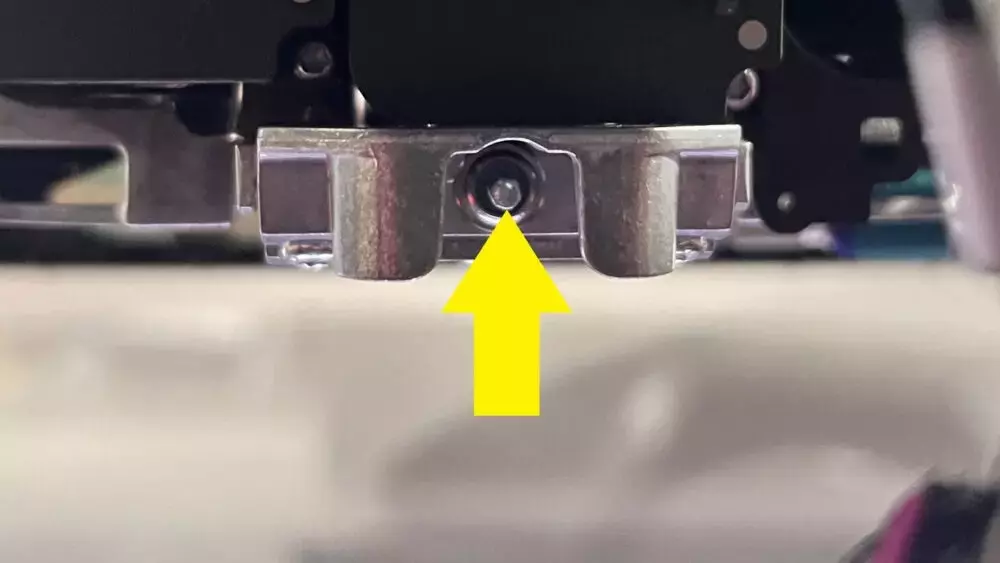
Addressing performance concerns and understanding system limitations are key aspects of FSD maintenance. Before diagnosing a customer's complaint, it's essential to gather detailed information, including the vehicle's actions, location, software version, chosen speed profile, environmental conditions (camera and road), and any warnings the driver received. Verifying that FSD was active and available, and checking the touchscreen for messages, are also crucial initial steps. Ensuring clean, unobstructed cameras and up-to-date map data is fundamental, as environmental factors like rain, snow, fog, direct sunlight, darkness, faded lane markings, or physical obstructions (such as a rear-mounted hitch or bike rack) can significantly impair performance. Occasional unavailability of FSD is expected under certain conditions, such as when the driver is not properly seated with a seat belt fastened, a door or front trunk is open, a charging cable is connected, the tailgate is down, or the vehicle is in a mode that restricts the feature. For Cybertrucks, headlights must be set to 'On' or 'Auto' for FSD to function correctly; otherwise, it may disengage or be unavailable. Camera obstructions or incomplete calibration can also prevent system use. It is important to acknowledge that not every report of unexpected behavior constitutes a normal operating limitation. Tesla's warnings mandate driver supervision, but they do not imply that every maneuver executed by the system is inherently acceptable. Technicians should meticulously document specific details such as exact location, route, road markings, signal status, weather, and time of day, and review vehicle alerts, camera status, calibration state, software, and service history. Reports of traffic law violations, such as proceeding against a red light or entering an opposing lane, necessitate thorough documentation and escalation according to established service protocols. The National Highway Traffic Safety Administration (NHTSA) initiated a preliminary evaluation in October 2025 concerning approximately 2.88 million FSD-equipped vehicles following reports of traffic law infractions. This investigation aims to assess FSD's capability to detect traffic signals, lane markings, and wrong-way signs, as well as the system's warning mechanisms and driver response times. It's important to note that an investigation does not automatically lead to a recall. Additionally, camera calibration is often required before initial use of self-driving features or following certain repairs. Cybertruck owner information indicates that calibration typically completes within 20 to 25 miles, although this distance can vary based on conditions, with clear lane markings, multiple visible lanes, straight roads, and light traffic facilitating the process. A multi-lane highway with clear markings is recommended for optimal calibration. After camera or windshield servicing, or if a camera's calibrated position has shifted, technicians should clear the existing calibration via the vehicle's controls, allowing the system to self-calibrate during driving. Prior to a road test, confirm proper camera and windshield installation, camera view, and relevant service work. If calibration remains incomplete after approximately 100 miles under suitable conditions, service is warranted. Calibration should not replace verification of the physical camera position; a misaligned camera may repeatedly fail calibration or provide unreliable data despite software recalibration. The forward-facing camera pitch adjustment procedure, though currently a draft, has been validated. Technicians must confirm the latest VIN-specific procedure and applicability before beginning, as steps are not universally interchangeable across all Tesla models. For Cybertruck adjustments, specific conditions like ride height, Service Mode activation, Gateway unlocking, and parking on a flat surface with adequate clearance are necessary. A camera calibration target must be precisely positioned against the front fascia. Within the touchscreen's Service Mode, technicians can access camera previews and pitch verification to assess alignment. If adjustment is needed, the rearview mirror cover is removed, and after clearing camera calibration and performing DAS resets and pings, a pitch-adjustment wrench is used. Clockwise rotation moves the camera upward, and counter-clockwise moves it downward, with one rotation altering pitch by about 0.5 to 1.5 degrees. This process is repeated until the reference aligns within the green lines. Finally, two recalls are particularly relevant to FSD and camera servicing: recall 23V-085 from 2023 addressed driving maneuvers that could violate traffic laws, resolved by an over-the-air software update; and recall 23V-489 covered 2023 Model S, X, and Y vehicles with misaligned forward-facing camera pitch, which could disable active-safety features without warning. Technicians should verify recall status by VIN and confirm completion before diagnosing related complaints.
Maintaining the integrity and safety of advanced driver-assistance systems like Tesla's Full Self-Driving is paramount. The sophisticated interplay of hardware, software, and environmental factors necessitates rigorous diagnostic protocols, precise calibration, and a deep understanding of system limitations. As these technologies evolve, the commitment to thorough service and continuous learning ensures that the benefits of autonomous driving are realized responsibly, upholding both innovation and driver safety on our roads.